
Japan vs South Korea: Which Is Better for a 10-Day Trip on a $2,000 Budget?
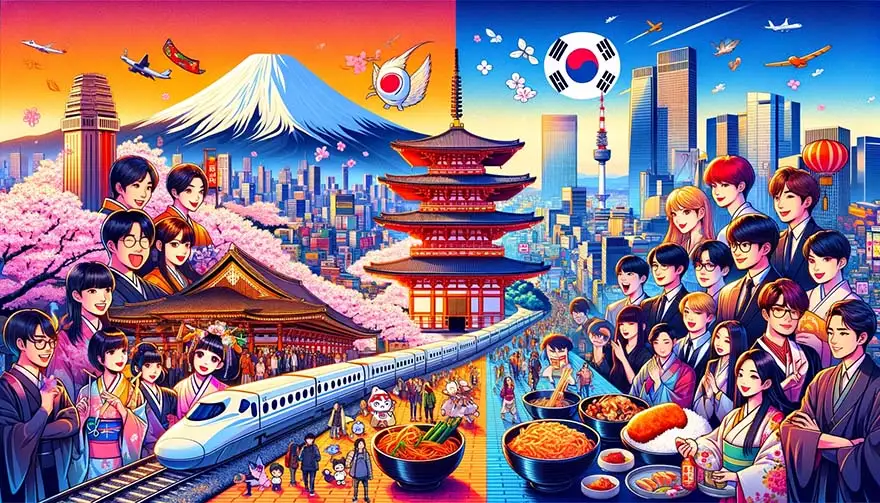
Japan vs South Korea: Which Is Better for a 10-Day Trip on a $2,000 Budget?
Last updated: July 2026
You have ten vacation days and approximately $2,000 to spend after arriving in East Asia.
Should you choose Japan or South Korea?
Japan promises Tokyo’s neon neighborhoods, Kyoto’s temples, bullet trains, regional food, anime culture, and one of the world’s most rewarding rail networks.
South Korea offers Seoul’s palaces and café districts, Busan’s beaches, energetic nightlife, K-pop culture, skincare shopping, excellent public transportation, and generally lower daily costs.
Both countries are safe, highly organized, food-focused destinations that work well for independent travelers. However, they do not deliver the same kind of vacation—and a ten-day schedule makes their differences especially important.
For most travelers, the decision comes down to this:
Choose Japan for greater destination variety, traditional architecture, rail travel, and iconic sightseeing.
Choose South Korea for better budget flexibility, nightlife, shopping, contemporary culture, and a less rushed ten-day route.
This guide compares realistic costs, suggested itineraries, accommodation, food, transportation, shopping, nightlife, and hidden expenses to help you choose the destination that best fits your travel style.
TL;DR
Choose Japan when you want:
- Tokyo, Kyoto, and Osaka in one trip
- Temples, gardens, shrines, and traditional streets
- World-class rail travel
- Anime, gaming, design, and Japanese pop culture
- Greater regional variety
- A highly structured sightseeing trip
Choose South Korea when you want:
- More comfort within a $2,000 budget
- Seoul plus Busan or Gyeongju without rushing
- K-pop, skincare, fashion, and café culture
- Late-night dining and nightlife
- Slightly cheaper accommodation and transportation
- More room for spontaneous activities
TADA’s Quick Verdict
| Travel Priority | Better Choice |
|---|---|
| Best overall value | South Korea |
| Most iconic first trip | Japan |
| Traditional culture | Japan |
| Shopping and beauty | South Korea |
| Food-focused trip | Tie |
| Nightlife | South Korea |
| Rail travel | Japan |
| Easier ten-day pace | South Korea |
| Anime and gaming | Japan |
| K-pop and contemporary culture | South Korea |
| Nature and regional variety | Japan |
| Staying comfortably below $2,000 | South Korea |
Is $2,000 Enough for Ten Days?
Yes, provided the budget excludes your long-haul flight to East Asia.
A $2,000 ground budget gives you approximately:
- $200 per day
- Around $1,400 for essential trip expenses
- Around $400 for shopping and optional experiences
- Around $200 as an emergency reserve
This is not an extreme backpacker budget in either country.
With careful planning, it can cover:
- A clean private hotel room
- Local restaurant meals every day
- Public transportation
- Intercity travel
- Major attractions
- Coffee, snacks, and occasional nightlife
- One or two premium experiences
- A modest shopping allowance
The main difference is how much financial pressure you will feel.
In Japan, $2,000 is comfortable but requires some planning around hotels, long-distance trains, premium attractions, and shopping.
In South Korea, the same budget usually provides more flexibility for larger rooms, cafés, nightlife, beauty shopping, and spontaneous activities.
Ten-Day Budget Comparison
The following estimates assume one independent traveler staying in centrally located business hotels or good guesthouses, eating mostly local food, and following either a Tokyo–Kyoto–Osaka route or a Seoul–Gyeongju–Busan route.
| Expense | Japan | South Korea |
|---|---|---|
| Accommodation | $650–900 | $500–750 |
| Food and drinks | $300–450 | $250–400 |
| Intercity transportation | $180–320 | $90–180 |
| Local transportation | $70–120 | $50–90 |
| Attractions and activities | $150–300 | $100–250 |
| SIM, laundry, and small expenses | $50–90 | $40–80 |
| Shopping and nightlife | $150–350 | $180–450 |
| Emergency buffer | $150–200 | $150–200 |
| Estimated total | $1,700–2,730 | $1,360–2,400 |
What This Means in Practice
A traveler with exactly $2,000 can visit Japan comfortably but may need to make deliberate choices about:
- Hotel location
- High-speed trains
- Theme parks
- Premium restaurants
- Shopping
- Day trips
The same traveler in South Korea may have more room for:
- A larger or more central hotel room
- Frequent café visits
- Skincare shopping
- Nightlife
- A food tour
- A beauty treatment
- Spontaneous day trips
Budget winner: South Korea
Option One: Ten Days in Japan
Japan is the better choice when the journey itself is part of the attraction.
Moving from Tokyo to Kyoto and Osaka creates clear contrasts in atmosphere, architecture, food, and local identity.
Within ten days, you can experience one of the world’s largest cities, historic temple districts, high-speed rail, Japanese gardens, regional food, traditional culture, and modern pop culture.
Recommended 10-Day Japan Itinerary
Days 1–4: Tokyo
Four days gives you enough time to experience several sides of Tokyo without turning every day into an exhausting checklist.
Organize your sightseeing geographically so that you do not waste time crossing the city repeatedly.
Day 1: Arrival and a Gentle Introduction
After a long flight, keep your first day simple.
- Check in and recover from the journey
- Explore your hotel neighborhood
- Eat at a casual ramen restaurant or izakaya
- Visit a nearby park, river, or observation point
- Buy or activate your transport card
- Avoid scheduling a major prepaid attraction
Your first day should help you adjust rather than force you to complete a full sightseeing schedule.
Day 2: Traditional Tokyo
Focus on older neighborhoods and cultural landmarks.
Possible stops include:
- Asakusa
- Sensō-ji
- Ueno
- Yanaka
- Kappabashi
- A local market
- Sumida River
Start early if you want to experience Sensō-ji before the busiest tour groups arrive.
Day 3: Modern Tokyo
Explore some of Tokyo’s most recognizable modern districts.
- Shibuya
- Harajuku
- Omotesando
- Shinjuku
- A department-store food hall
- An evening viewpoint
- Nightlife or an izakaya district
Shibuya and Harajuku work well together, while Shinjuku is better saved for the afternoon and evening.
Day 4: Choose Your Personal Interest
Instead of following a generic itinerary, choose one theme that reflects your interests.
Possible options include:
- Anime and gaming in Akihabara
- Art and architecture
- Vintage fashion
- Japanese food neighborhoods
- Photography
- Museums
- Shopping
- A day trip to Kamakura or Yokohama
Tokyo can become expensive when you book several premium attractions and use taxis frequently. It remains manageable when you explore one or two neighboring districts each day.
Days 5–7: Kyoto
Travel from Tokyo to Kyoto and stay for three nights.
Kyoto is often the emotional highlight of a first trip to Japan. It is also one of the easiest places to overcrowd your itinerary.
Prioritize meaningful experiences instead of trying to visit every famous temple.
Suggested Kyoto Experiences
- Visit Fushimi Inari early in the morning
- Explore Kiyomizu-dera and the eastern historic districts
- Walk around Gion in the evening
- Visit Arashiyama
- Choose one quieter temple or garden
- Browse Nishiki Market
- Join a tea experience
- Try a traditional Japanese meal
Kyoto accommodation can become expensive during:
- Cherry-blossom season
- Autumn foliage
- Public holidays
- School holidays
- Major cultural events
Booking early is particularly important in Kyoto.
Days 8–10: Osaka, with an Optional Nara Day Trip
Move to Osaka for the final part of the trip.
Osaka offers a more casual atmosphere than Kyoto and is especially strong for food, nightlife, shopping, and evening entertainment.
Spend time around:
- Dotonbori
- Namba
- Kuromon Market
- Umeda
- Shinsekai
- Osaka Castle
- Local shopping streets
- Neighborhood restaurants
Use one day for Nara if you enjoy temples, gardens, historic landscapes, and a slower atmosphere.
An efficient option is to arrive in Tokyo and depart from Osaka through Kansai International Airport. This avoids paying for a return journey to Tokyo and saves valuable vacation time.
Why Japan Works Well for Ten Days
Japan offers an unusually high concentration of memorable experiences.
A ten-day itinerary can include:
- A global megacity
- Historic temple neighborhoods
- High-speed rail
- Traditional gardens
- Regional food cultures
- Modern design
- Anime and gaming culture
- Nightlife
- A countryside or coastal day trip
The route feels like a complete journey rather than a simple city break.
Japan is also highly predictable. Trains are generally reliable, public areas are orderly, and accommodation standards are consistent.
This makes it easy to build a detailed itinerary—but the temptation to overplan can become a disadvantage.
Japan’s Biggest Budget Risks
High-Speed Rail
Japan’s trains are excellent, but long-distance journeys are not automatically cheap.
A Tokyo–Kyoto–Osaka route is manageable within a $2,000 budget. Adding Hiroshima, Kanazawa, Takayama, Hakone, and several day trips can quickly increase transportation costs.
Do not buy a nationwide rail pass automatically.
Compare:
- Individual train tickets
- Regional rail passes
- Highway buses
- Domestic flights
- Your actual itinerary
A pass only saves money when the trips included in your route cost more than the pass itself.
Accommodation in Tokyo and Kyoto
Business hotels offer reliable quality, but central rooms can become expensive during popular seasons.
The cheapest hotel may also be far from the neighborhoods you plan to visit, creating extra transportation costs and longer daily journeys.
A better-value hotel near a useful train line is often preferable to the cheapest room on the edge of the city.
Theme Parks and Premium Attractions
Experiences such as the following can consume a large part of your activity budget:
- Universal Studios Japan
- Major observation decks
- Digital-art museums
- Character cafés
- Theme restaurants
- Premium cultural performances
- Special exhibitions
Choose one or two priority experiences instead of booking everything that appears on social media.
Shopping
Japan makes small purchases dangerously easy.
Popular temptations include:
- Stationery
- Skincare
- Cameras
- Kitchen knives
- Vintage clothing
- Anime merchandise
- Character goods
- Snacks
- Souvenirs
- Electronics
A few small purchases every day can quietly add hundreds of dollars to your total spending.
Option Two: Ten Days in South Korea
South Korea works especially well when you want a less pressured itinerary.
Rather than moving through three large destinations every few days, you can spend meaningful time in Seoul and combine it with Busan, Gyeongju, Jeonju, or a regional day trip.
The country’s compact geography makes it easier to travel between major destinations without spending a large share of your budget on transportation.
Recommended 10-Day South Korea Itinerary
Days 1–5: Seoul
Five days may seem generous, but Seoul is enormous and highly varied.
The city combines palaces, historic neighborhoods, modern architecture, nightlife, hiking, markets, cafés, beauty shopping, fashion, and contemporary culture.
Day 1: Arrival and Neighborhood Exploration
Keep the first day relaxed.
- Check in
- Walk around your local district
- Eat Korean barbecue, noodles, or a casual stew
- Visit a convenience store
- Activate your transport card or mobile data
- Rest rather than forcing a major sightseeing schedule
Popular areas to stay include Myeongdong, Hongdae, Jongno, Insadong, Gangnam, and areas near Seoul Station.
The right neighborhood depends on whether you prioritize sightseeing, nightlife, shopping, or transportation.
Day 2: Historic Seoul
Focus on traditional and historical landmarks.
Possible stops include:
- Gyeongbokgung Palace
- Bukchon or a quieter hanok neighborhood
- Insadong
- Cheonggyecheon
- Gwangjang Market
- A traditional tea house
Consider renting a hanbok if the experience interests you, but compare prices and rental conditions before booking.
Day 3: Contemporary Seoul
Choose neighborhoods based on your interests.
- Seongsu for design, fashion, and cafés
- Hongdae for youth culture and nightlife
- Gangnam for modern city experiences
- Hannam or Itaewon for dining and international culture
- Myeongdong for cosmetics and convenient shopping
Avoid trying to combine too many distant neighborhoods in one day. Seoul’s metro is excellent, but journeys and station transfers can take longer than they appear on the map.
Day 4: Personal-Interest Day
Choose one theme:
- K-pop
- Skincare
- Fashion
- Museums
- Food markets
- Architecture
- Hiking
- Café hopping
- Korean history
- Beauty treatments
A personalized day usually creates a better memory than visiting another list of famous landmarks.
Day 5: Day Trip
Possible day trips include:
- Suwon
- Incheon
- Nami Island
- A mountain excursion
- A coastal destination
- The DMZ, when tours and access conditions permit
Check current operating conditions before booking sensitive or weather-dependent excursions.
Days 6–7: Gyeongju
Travel to Gyeongju for a slower cultural stop.
Gyeongju adds:
- Royal tombs
- Historic sites
- Buddhist heritage
- Traditional architecture
- Cycling
- Quiet streets
- Nighttime walks around illuminated landmarks
It creates a valuable contrast between modern Seoul and coastal Busan.
Travelers who prefer fewer hotel changes can skip Gyeongju and add those nights to Seoul or Busan.
Days 8–10: Busan
Finish the trip in Busan.
The city combines:
- Beaches
- Seafood
- Hillside neighborhoods
- Traditional markets
- Coastal walks
- Temples
- Modern cafés
- Night views
Possible highlights include:
- Haeundae
- Gwangalli
- Jagalchi Market
- Gamcheon Culture Village
- Haedong Yonggungsa
- Coastal walking routes
- Beach trains or seaside transport
Busan is geographically spread out, so group activities by area rather than crossing the city several times each day.
Depart from Busan when an open-jaw international flight is competitively priced. Otherwise, return to Seoul by high-speed train.
Why South Korea Works Well for Ten Days
South Korea gives travelers more breathing room.
You can spend five nights in Seoul without running out of things to do, then add one or two regional destinations without feeling that every morning begins with luggage and a train station.
It is especially rewarding for travelers interested in:
- Food
- Fashion
- Skincare
- Contemporary culture
- Cafés
- Nightlife
- Korean history
- Urban design
- K-pop and entertainment
- Social dining
- Markets
The country also makes it easy to adjust your itinerary. Seoul alone has enough variety to absorb extra days if weather or fatigue changes your plans.
South Korea’s Biggest Budget Risks
Skincare and Fashion Shopping
A lower daily travel budget will not help if you spend several hundred dollars in Myeongdong, Seongsu, or a department store.
Set a separate shopping limit before arrival.
Keep essential trip funds separate from money allocated to cosmetics, fashion, and souvenirs.
Café Culture
South Korea has one of the most appealing café scenes in Asia.
Specialty drinks, elaborate desserts, and concept cafés can cost as much as a full local meal.
One or two café visits every day may become a significant expense during a ten-day trip.
Nightlife
Late-night dining, bars, clubs, karaoke, taxis, and convenience-store stops add up quickly.
Public transportation may stop before your evening does, leaving you dependent on taxis.
Check the last metro or bus before starting a late evening.
Solo Dining Limitations
Many Korean restaurants welcome solo travelers, but some barbecue, hotpot, and shared-dish restaurants are designed for groups and may require minimum orders.
Good alternatives include:
- Food courts
- Markets
- Noodle shops
- Set-meal restaurants
- Kimbap restaurants
- Convenience stores
- Department-store food halls
Accommodation: Which Country Gives Better Value?
Japan
Japan is exceptionally consistent.
Even basic business hotels usually provide:
- High cleanliness standards
- Private bathrooms
- Reliable amenities
- Convenient check-in
- Good transportation access
- Strong security
- Predictable service
The main trade-off is room size.
A reasonably priced Tokyo or Osaka room may be so compact that opening two large suitcases becomes difficult.
Japan is best for travelers who value reliability more than space.
South Korea
South Korea generally provides more room for the same amount of money.
Budget-conscious travelers may find:
- Larger hotel rooms
- Guesthouses
- Modern hostels
- Apartment-style accommodation
- Affordable business hotels
- Better-value stays outside the most fashionable Seoul districts
Quality may be less standardized than in Japan, so recent reviews and guest photos are especially important.
Accommodation Verdict
- Best for price and space: South Korea
- Best for consistency and reliability: Japan
Food: Japan or South Korea?
This category depends more on your eating style than on national price averages.
Japan Is Better When You Want:
- Solo-friendly restaurants
- Ramen
- Sushi
- Udon and soba
- Tonkatsu
- Yakitori
- Department-store food halls
- Convenience-store meals
- Precise regional specialties
- Counter-style dining
Japan makes it easy to eat alone without feeling uncomfortable.
Many casual restaurants use counter seating, vending-machine ordering, touchscreen menus, or clear set meals.
South Korea Is Better When You Want:
- Korean barbecue
- Fried chicken
- Stews
- Street food
- Shared meals
- Banchan
- Late-night dining
- Cafés and desserts
- Markets
- Social food experiences
Korean dining often feels more social and generous, particularly for couples and groups.
Food Verdict
- Best for solo dining: Japan
- Best for shared meals: South Korea
- Best overall food destination: Tie
Transportation: Which Is Easier?
Japan
Japan has the stronger national rail experience.
Its advantages include:
- Dense urban rail networks
- High-speed intercity trains
- Reliable schedules
- Convenient station facilities
- Easy access to day-trip destinations
- Strong connections between major tourist cities
The challenge is deciding which ticket or pass offers the best value.
Large stations can also feel overwhelming during the first few days.
South Korea
South Korea offers:
- Excellent urban metro systems
- High-speed KTX trains
- Affordable intercity buses
- Simple transport cards
- Relatively short distances between major destinations
- Clear links between Seoul, Gyeongju, and Busan
Seoul’s transport system is extensive, although transfers between lines and station exits can involve long walks.
Transportation Verdict
- Best transport quality: Japan
- Best transport value: South Korea
- Best high-speed rail experience: Japan
- Best for a compact ten-day route: South Korea
Traditional Culture
Japan offers more immediately visible historical atmosphere along the standard first-time route.
Kyoto alone provides:
- Temple districts
- Gardens
- Traditional streets
- Shrines
- Tea culture
- Historic architecture
- Seasonal ceremonies
South Korea’s cultural sites are rewarding but are often surrounded by modern city development.
Gyeongju, Jeonju, Seoul’s palaces, Buddhist temples, and traditional villages add cultural depth, but travelers may need to seek them out more deliberately.
Traditional-culture winner: Japan
Shopping and Contemporary Culture
South Korea is the stronger choice for:
- Skincare
- Cosmetics
- Fashion
- K-pop merchandise
- Contemporary cafés
- Lifestyle brands
- Trend-driven neighborhoods
- Beauty treatments
Japan is the stronger choice for:
- Anime
- Gaming
- Cameras
- Electronics
- Stationery
- Kitchenware
- Vintage clothing
- Character merchandise
- Traditional crafts
- Design products
Shopping Verdict
- Beauty and fashion: South Korea
- Collectibles and character merchandise: Japan
- Electronics and kitchenware: Japan
- Trend-driven lifestyle shopping: South Korea
Nightlife
Seoul’s nightlife often feels more social and accessible to younger visitors.
Popular areas offer:
- Bars
- Clubs
- Live music
- Late-night restaurants
- Karaoke
- Convenience-store culture
- Busy streets well into the night
Tokyo and Osaka also have outstanding nightlife, but venues can feel smaller, more fragmented, or harder to understand for first-time visitors.
Japan excels at intimate bars, izakayas, and neighborhood drinking culture.
South Korea excels at high-energy group nightlife and late-night dining.
Nightlife winner: South Korea
Which Is Better for Solo Travelers?
Choose Japan When You:
- Prefer independent sightseeing
- Like eating alone
- Want efficient rail travel
- Enjoy photography and museums
- Appreciate structure and predictability
- Do not need a highly social hostel environment
Choose South Korea When You:
- Want nightlife
- Enjoy cafés and shopping
- Plan to stay mostly in major cities
- Like contemporary culture
- Want to meet other young travelers
- Prefer a lower accommodation budget
Solo-Travel Verdict
- Best for independent solo travel: Japan
- Best for social solo travel: South Korea
Which Is Better for Couples?
Japan suits couples who want:
- Scenic rail journeys
- Traditional accommodation
- Gardens
- Temples
- Onsen experiences
- Carefully planned dining
- Seasonal scenery
South Korea suits couples who want:
- Café dates
- Shopping
- Beauty experiences
- Nightlife
- Photogenic neighborhoods
- Shared meals
- A more spontaneous city break
Couples Verdict
- Best for traditional romance: Japan
- Best for a modern city break: South Korea
Which Is Better for First-Time Visitors to East Asia?
Japan offers more instantly recognizable bucket-list experiences.
A first trip can include:
- Tokyo
- Kyoto
- Osaka
- The Shinkansen
- Shrines and temples
- Japanese gardens
- Anime culture
- Traditional food
- Modern technology
South Korea may be easier financially and less overwhelming to plan, but Japan provides more dramatic contrasts within the classic ten-day route.
First-time East Asia winner: Japan
Hidden Costs to Consider
Japan
Watch for:
- Long-distance train tickets
- Luggage forwarding
- Coin lockers
- Theme parks
- Observation decks
- Seasonal hotel pricing
- Character cafés
- Premium cultural experiences
- Extensive shopping
South Korea
Watch for:
- Skincare purchases
- Café spending
- Late-night taxis
- Beauty treatments
- K-pop merchandise
- Minimum orders at shared-meal restaurants
- Airport transfers
- Shopping in trend-focused districts
The key difference is that Japan’s biggest hidden costs are often logistical, while South Korea’s are frequently discretionary.
How to Keep Japan Under $2,000
- Book an open-jaw flight into Tokyo and out of Osaka.
- Stay near useful train lines rather than famous landmarks.
- Choose reliable business hotels.
- Eat at local chains, noodle shops, food halls, and casual restaurants.
- Compare individual train tickets with rail passes.
- Choose one premium attraction rather than several.
- Avoid visiting too many cities.
- Reserve Kyoto accommodation early.
- Set a separate shopping allowance.
- Use free viewpoints, parks, neighborhoods, and temple grounds.
- Group attractions geographically to reduce transportation costs.
- Avoid taxis unless necessary.
How to Keep South Korea Under $2,000
- Spend at least four or five nights in Seoul.
- Use trains or intercity buses instead of internal flights.
- Stay near a metro station outside the most fashionable districts.
- Eat at markets, food courts, noodle shops, and local restaurants.
- Limit specialty café visits.
- Create a fixed skincare and fashion budget.
- Use public transportation before late-night services end.
- Choose Busan plus one smaller city rather than adding several stops.
- Compare beauty-treatment prices and inclusions.
- Keep your emergency buffer separate from your shopping money.
- Avoid changing accommodation unnecessarily.
- Group Seoul neighborhoods by location.
Japan vs South Korea by Travel Style
| Traveler Type | Better Choice | Why |
|---|---|---|
| First-time East Asia visitor | Japan | More iconic sights and greater regional contrast |
| Budget-conscious traveler | South Korea | Lower accommodation and transport costs |
| Food-focused solo traveler | Japan | Easier solo dining |
| Food-focused couple or group | South Korea | Strong shared-meal culture |
| Anime or gaming fan | Japan | More specialized attractions and shopping |
| K-pop or skincare fan | South Korea | Stronger beauty and entertainment culture |
| Nightlife traveler | South Korea | More accessible late-night districts |
| History and architecture traveler | Japan | Kyoto adds exceptional traditional atmosphere |
| Shopping-focused traveler | Depends | Japan for collectibles; Korea for fashion and beauty |
| Relaxed traveler | South Korea | Easier to build a slower ten-day route |
| Train enthusiast | Japan | Stronger long-distance rail experience |
| Café lover | South Korea | More extensive concept-café culture |
Final Verdict
Choose Japan for the Stronger Once-in-a-Lifetime Itinerary
Japan is the better first choice when you care most about:
- Traditional culture
- Destination variety
- Rail travel
- Temples and gardens
- Anime and gaming
- Iconic sightseeing
- Highly organized independent travel
A $2,000 ground budget is workable, but the trip requires more careful decisions.
You may need to choose between:
- A central hotel and a premium train journey
- A theme park and extensive shopping
- A traditional accommodation experience and several expensive activities
Japan rewards detailed planning.
Choose South Korea for Better Value and a More Relaxed Ten Days
South Korea is the better choice when you prioritize:
- Shopping
- Skincare
- Nightlife
- Contemporary culture
- Cafés
- K-pop
- Modern neighborhoods
- Greater financial flexibility
Your $2,000 budget is more likely to cover comfortable accommodation, intercity transportation, activities, shopping, and spontaneous decisions without constant calculations.
South Korea rewards flexibility.
The Simplest Decision
Choose Japan when your dream sounds like:
“I want Tokyo, temples, bullet trains, regional food, and a trip that feels completely different every few days.”
Choose South Korea when your dream sounds like:
“I want Seoul’s energy, Korean food, shopping, nightlife, cafés, and enough budget left to enjoy everything spontaneously.”
For an iconic first East Asia journey, Japan wins.
For a better-value ten-day vacation with less financial pressure, South Korea wins.
Frequently Asked Questions
Is Japan or South Korea cheaper for tourists?
South Korea is generally slightly cheaper for accommodation, local transportation, cafés, and everyday expenses. Japan can still be visited comfortably on a moderate budget, especially when using business hotels and casual restaurants.
Is $2,000 enough for ten days in Japan?
Yes, excluding long-haul flights. A traveler can stay in business hotels, eat well, use public transportation, and follow a Tokyo–Kyoto–Osaka route. Premium hotels, theme parks, extensive shopping, and multiple long-distance trips may push the total above $2,000.
Is $2,000 enough for ten days in South Korea?
Yes. The budget can support private accommodation, a Seoul–Gyeongju–Busan itinerary, local meals, intercity trains, attractions, cafés, and some shopping.
Which country is better for first-time travelers?
Japan offers more iconic sights and greater destination variety. South Korea is easier for travelers who prioritize budget flexibility, nightlife, shopping, and a slower itinerary.
Which country has better food?
Both are exceptional. Japan is particularly easy for solo dining, while Korean meals are often more social and designed for sharing.
Which country is better for shopping?
South Korea is better for skincare, cosmetics, fashion, and K-pop. Japan is better for anime, electronics, stationery, vintage fashion, kitchenware, and collectibles.
Is ten days enough for Japan?
Yes, but limit the itinerary to Tokyo, Kyoto, and Osaka, with no more than one or two day trips.
Is ten days enough for South Korea?
Yes. Ten days is enough for Seoul, Busan, and either Gyeongju, Jeonju, or another regional destination.
Can I visit Japan and South Korea in ten days?
Technically yes, but it is rarely the best use of limited time. Flights, airport transfers, immigration, hotel changes, and orientation days reduce the actual travel experience.
Choose one country for a more rewarding ten-day trip.
Which country is better without renting a car?
Both are excellent without a car.
Japan has the stronger national rail system, while South Korea combines metros, KTX trains, and affordable intercity buses.
Which country is better for nightlife?
South Korea, particularly Seoul and Busan, generally offers more accessible late-night dining, cafés, bars, karaoke, and high-energy entertainment districts.
Which country is better for traditional culture?
Japan has the advantage along the standard tourist route, particularly because of Kyoto.
South Korea offers excellent historical experiences in Seoul, Gyeongju, Jeonju, and its Buddhist temples.
Which destination is better for couples?
Japan is stronger for traditional romance, scenic rail journeys, ryokans, gardens, and seasonal scenery.
South Korea is better for cafés, shopping, nightlife, beauty experiences, and contemporary urban culture.
Should I book an open-jaw flight?
Yes, when the price is reasonable.
Flying into Tokyo and out of Osaka—or into Seoul and out of Busan—can reduce backtracking and protect limited vacation time.
Is Japan safer than South Korea?
Both countries are generally considered very safe for visitors. Travelers should still take normal precautions with personal belongings, nightlife, transportation, weather, and emergency information.
Which country is easier for English-speaking travelers?
Major tourism areas in both countries provide English signage and traveler support. Translation apps remain useful, especially in smaller restaurants, regional transport stations, and destinations outside the main tourist routes.
Internal-Link Suggestions
Add links to these TADA articles:
- Japan vs South Korea: Which Should You Visit First?
- The Perfect 10-Day Japan Itinerary
- The Perfect 10-Day South Korea Itinerary
- How Much Does a Japan Trip Cost?
- South Korea Travel Budget for First-Time Visitors
- Tokyo vs Seoul: Which City Is Better for You?
- Kyoto vs Gyeongju: Which Historic City Should You Visit?
- Osaka vs Busan: Food, Nightlife, and Budget Compared
- Japan for Anime Fans: A First-Time Itinerary
- South Korea for K-Pop and K-Drama Fans
- Two Weeks in Japan on a Budget
- Seoul, Gyeongju, and Busan Without a Car
Sources to Verify Before Publishing
Verify prices, transportation policies, entry requirements, and operating information with:
- Japan National Tourism Organization
- Korea Tourism Organization
- Official JR railway websites
- Official KTX and Korail websites
- Official Tokyo, Kyoto, Osaka, Seoul, Gyeongju, and Busan tourism websites
- Official immigration and visa portals for Japan and South Korea
- Current hotel-booking platforms
- Current transportation booking platforms
- Current foreign-exchange data
All prices in this article are planning estimates.
Actual costs depend on:
- Exchange rates
- Travel season
- Booking date
- Accommodation standards
- Shopping habits
- Activities
- Restaurant choices
- Solo or shared travel
- Departure and arrival airports
Always verify current transport prices, visa requirements, opening hours, and reservation rules before traveling.
Plan Your Japan or South Korea Trip with TADA
A comparison guide can identify the better destination on paper.
Your ideal trip still depends on your dates, departure airport, interests, budget, accommodation style, and preferred travel pace.
TADA turns those details into a personalized itinerary—whether you want a fast-paced Tokyo, Kyoto, and Osaka journey or a slower Seoul, Gyeongju, and Busan experience.
Build a trip around the way you actually travel instead of forcing your vacation into a generic route.
Start planning with TADA.